Cameroon’s Mining Boom: Can Minerals Really Overtake Oil?
For decades, oil has been one of the pillars of Cameroon’s export economy. But the country's next major economic story may be buried underground.
Cameroon is entering a new phase in the development of its mining sector, with several large-scale projects moving into production or commissioning and the government targeting more than CFAF1 trillion (about $1.75 billion) in annual mining revenue in the short term. The projection, announced by Mines Minister Fuh Calistus Gentry in July, could eventually put mining ahead of oil as a source of government revenue.
That is an ambitious target—and it deserves closer examination.
The opportunity is not simply about extracting more iron ore, bauxite, gold or marble. If Cameroon gets the next phase right, mining could stimulate investment in transport, energy, processing, logistics, engineering, financial services and manufacturing.
But the opposite is also possible.
Without reliable infrastructure, transparent resource governance, adequate financing and greater local value addition, the country could simply become a larger exporter of raw minerals without capturing enough of the economic value created.
For investors and businesses, that distinction may be the most important part of Cameroon's emerging mining story.
Why Mining Has Suddenly Become a Bigger Economic Story
Cameroon has never lacked mineral resources.
The country has significant deposits of iron ore, bauxite, gold, rutile, cobalt, nickel, manganese and other minerals. Yet much of this potential has remained commercially underdeveloped.
That is now beginning to change.
The government says five major projects have entered production or commissioning:
Minim-Martap — bauxite
Bipindi-Grand-Zambi — iron ore
Kribi-Lobé — iron ore
Bidzar — marble
Colomine — gold
Additional projects, including Mbalam, Nkout, Ngovayang, Mborguene and Bibemi, are also expected to advance.
This represents an important shift from a mining sector dominated by exploration and small-scale operations toward a more industrial model.
It also explains why the government is increasingly presenting mining as an instrument of economic diversification.
The $1.75 Billion Target Needs Context
The headline figure is striking: CFAF1 trillion in annual mining revenue.
But it is important to understand what the number represents.
It is a government projection, not money already being generated by the sector. The target depends on several projects reaching meaningful production levels, infrastructure being available to move minerals to market, and reforms successfully bringing more mineral production into the formal economy.
That distinction matters for investors.
Mining projects can take years to move from feasibility studies to construction, commissioning and steady-state production. Even after production begins, output can initially remain below long-term targets as operators solve technical and logistical challenges.
So the more useful question is not simply:
“Can Cameroon make CFAF1 trillion from mining?”
It is:
“What needs to happen for Cameroon to turn its mineral resources into a reliable, diversified source of economic value?”
Minim-Martap Could Be a Game Changer
Among Cameroon's mining projects, the Minim-Martap bauxite project is one of the most closely watched.
Located in the Adamawa Region, the project is designed to turn one of the country's major bauxite resources into a commercial export operation.
Its importance goes beyond the mine itself.
Bauxite production requires an ecosystem of infrastructure and services, including:
Roads and railways
Electricity
Water infrastructure
Heavy equipment
Warehousing
Logistics
Port services
Engineering
Financial services
This means the economic impact of a large mining project can extend well beyond the company operating the mine.
However, the project's development also illustrates why Cameroon needs to be realistic about timelines. Production targets, infrastructure requirements and financing arrangements will determine how quickly the project can move from development into meaningful commercial output.
For businesses, this creates opportunities throughout the supply chain—not only in mining itself.
Iron Ore Could Reshape Cameroon’s Export Map
Iron ore is another major component of Cameroon's mining ambitions.
The Bipindi-Grand-Zambi and Kribi-Lobé projects are particularly significant because they combine mineral resources with Cameroon's expanding coastal infrastructure.
The Kribi-Lobé project is especially interesting from a logistics perspective. Its proximity to the deep-sea port at Kribi could help connect mineral production to international markets.
This is where mining and infrastructure intersect.
A successful mining industry requires more than mineral deposits. It needs efficient corridors connecting mines to processing facilities, ports and international buyers.
That creates potential opportunities for:
Transport companies
Freight and logistics providers
Equipment suppliers
Engineering firms
Construction companies
Warehousing businesses
Port-related service providers
In other words, the mining economy could create a much larger business ecosystem around the mines themselves.
Gold Presents Both an Opportunity and a Governance Challenge
Gold may be Cameroon's most complicated mining story.
The country has significant artisanal and semi-mechanized gold production, but authorities have been concerned about the gap between production and officially recorded exports.
Government figures cited in July indicated a substantial discrepancy between gold officially recorded as exported and estimates of gold actually leaving the country. The government has linked reforms in the sector to improving traceability, formalization and revenue collection.
That means the opportunity is not only about opening new industrial gold mines.
There is also a major opportunity in formalizing the existing gold economy.
Better systems could create demand for:
Mineral testing and certification
Secure transportation
Financial services
Gold trading infrastructure
Digital traceability
Compliance services
Mining technology
Environmental monitoring
SONAMINES, the state mining corporation, has also been actively involved in improving the formal management and commercialization of gold.
Critical Minerals Put Cameroon on a Bigger Map
Cameroon's mining ambitions are not limited to traditional commodities.
The Nkamouna-Lomié project in the East Region contains cobalt, nickel and manganese—minerals that have become strategically important to global manufacturing and energy supply chains.
According to SONAMINES' project documentation, previous feasibility work estimated more than 100 million tonnes of proven and probable ore reserves for the Nkamouna-Mada cobalt-nickel-manganese project.
That does not automatically make the project commercially successful.
It does, however, highlight why Cameroon is attracting attention from investors interested in critical minerals.
The global race for secure supplies of minerals used in batteries, electronics, infrastructure and industrial manufacturing is creating new strategic opportunities for resource-rich African countries.
Cameroon will need to compete for capital, technical expertise and long-term partnerships.
But There Is a Warning Sign for Investors
The mining opportunity is real, but recent developments also show that investors cannot assume every project will move forward smoothly.
On August 19, SONAMINES announced that its international selection processes for technical and financial partners for the Akonolinga rutile project and the Lomié-Nkamouna cobalt-nickel-manganese project had produced no qualifying candidates. The corporation subsequently said it was open to negotiations with investors possessing the required technical and financial capabilities.
That is significant.
It shows that having mineral resources is only the starting point.
Projects still need:
Bankable feasibility studies
Experienced technical partners
Adequate financing
Reliable infrastructure
Strong project management
Regulatory certainty
Commercially viable operating models
For international investors, Cameroon is therefore a market requiring both opportunity recognition and careful due diligence.
The Real Opportunity May Be Outside Mining
One of the most interesting aspects of the mining boom is that some of the best business opportunities may not involve owning a mine.
A growing industrial mining sector will need an ecosystem of companies capable of supplying goods and services.
Potential areas include:
Logistics
Mining creates large and continuous demand for transportation, storage and cargo handling.
Equipment and Maintenance
Heavy machinery requires spare parts, maintenance, repairs and specialized technical services.
Construction
Roads, railways, power infrastructure, processing facilities and worker accommodation all create demand for construction businesses.
Financial Services
Mining companies and suppliers require banking, insurance, investment, foreign-exchange and financing services.
Technology
Digital systems can improve mineral traceability, fleet management, environmental monitoring, procurement and operational efficiency.
Professional Services
Accounting, legal, environmental consulting, engineering and compliance services can all benefit from increased mining activity.
This creates an important message for Cameroonian SMEs:
You do not necessarily need to own a mine to participate in the mining economy.
Infrastructure Will Determine How Much Cameroon Gains
Minerals underground have little economic value if they cannot be transported efficiently to market.
That makes infrastructure one of the biggest determinants of whether Cameroon's mining ambitions succeed.
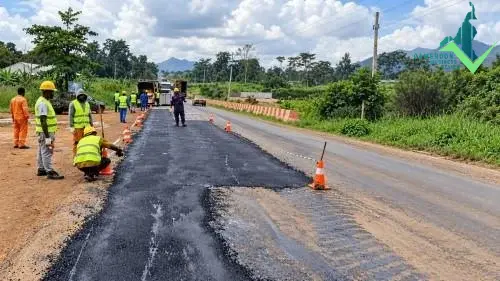
Railways, roads, ports and electricity infrastructure will need to develop alongside mining projects.
The connection between the mining sector and the Kribi industrial-port complex is particularly important. Recent infrastructure developments around Kribi are intended to support expanding port, industrial and logistics activity.
This creates a broader investment story.
If mining production expands, demand for infrastructure and logistics should rise. If infrastructure improves, more mining projects may become commercially viable.
The two sectors can therefore reinforce each other.
From Mineral Exports to Industrialisation
Perhaps the biggest question facing Cameroon is what happens after extraction.
Exporting raw minerals can generate foreign exchange and government revenue, but processing creates additional value.
The government has increasingly emphasized local processing and industrialization as part of the mining strategy.
That could eventually create opportunities in:
Mineral processing
Refining
Industrial manufacturing
Construction materials
Metal fabrication
Chemical industries
Equipment manufacturing
This is where mining could have a much larger impact on the economy.
The objective should not simply be to extract more.
It should be to build more economic activity around what is extracted.
What Investors Should Watch Next
For businesses and investors following the Cameroon mining sector, several indicators will be particularly important over the coming months:
Progress toward commercial production at major projects
Infrastructure development around mining corridors
New investment and financing agreements
Gold formalization and traceability measures
Development of critical mineral projects
Local processing initiatives
Regulatory implementation
Partnerships between SONAMINES and private investors
These indicators will provide a better measure of the sector's progress than headline revenue projections alone.
Final Thoughts
Cameroon is sitting on a potentially transformative mining opportunity.
The government expects the sector to generate more than CFAF1 trillion annually in the short term, while projects covering bauxite, iron ore, gold and industrial minerals move forward.
But the country's mining future will not be determined by the size of its mineral deposits alone.
It will depend on whether Cameroon can build the infrastructure, attract credible technical and financial partners, improve transparency, formalize production and capture more value locally.
The latest developments at Akonolinga and Nkamouna are a useful reminder that attracting investment in mining is highly competitive. Cameroon has resources, but investors also have choices.
For entrepreneurs, the opportunity may be even broader. As industrial mining expands, demand for logistics, engineering, equipment, technology, finance and professional services could create an entirely new layer of businesses around the sector.
The real test, therefore, is not whether Cameroon can replace oil with mining.
It is whether Cameroon can use mining to build a more diversified economy, one where minerals become the starting point for industrial growth rather than simply another category of raw exports.
Cameroon Business Review will continue tracking the projects, policies and investment developments shaping this emerging sector.