
Yango Ride Takes Safety Beyond the App in Cameroon
For a ride-hailing platform, safety cannot begin and end with a button inside an app.
It involves the person behind the wheel, the passenger in the back seat, the condition of the vehicle, the driver’s health, the information exchanged during a trip and what happens when something goes wrong.
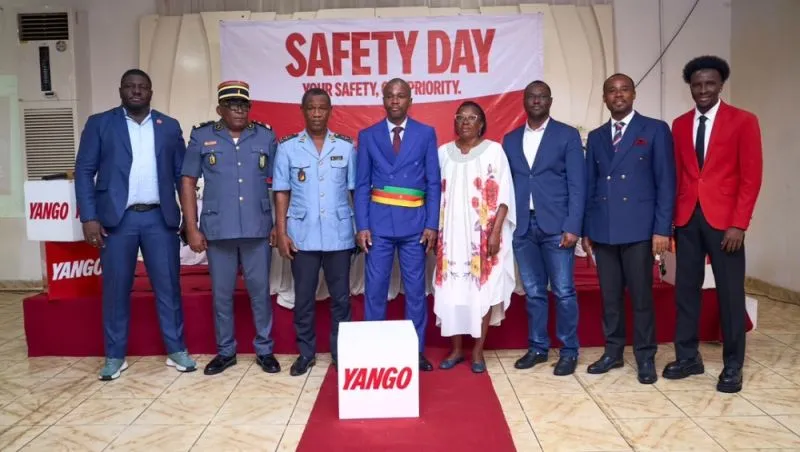
That broader view was at the centre of Yango Ride’s safety events held in Yaoundé and Douala this September, bringing together partner drivers and couriers, road safety authorities, health professionals, digital security specialists and other stakeholders.
Held under the theme “Your Safety, Our Priority,” the events combined practical road-safety training with health checks and demonstrations of Yango’s digital safety tools.
For Cameroon’s growing ride-hailing market, the initiative points to a wider business question: how can technology companies build trust around the services that increasingly shape everyday urban mobility?
Safety Starts With the Driver
One of the most practical elements of the events was also one of the simplest: checking the health of the people spending hours on the road.
Partner drivers received free eyesight testing, blood pressure checks and general wellness assessments through collaborations involving the Cameroon Red Cross, Calex Optics and CareHelp.
In Yaoundé, the Cameroon Red Cross also provided CPR training, giving participants practical knowledge that could be useful in an emergency. Drivers requiring corrective attention following the visual screenings received guidance on the next steps.
The focus on eyesight is particularly relevant for professional drivers.
A ride-hailing driver can spend most of a working day navigating congested roads, pedestrians, motorcycles and changing traffic conditions. A health issue that might appear minor in another profession can become a road-safety concern when someone is responsible for passengers.
This makes driver wellbeing part of the wider safety conversation.
As Dr. Clovis Pilla, Country Manager of Yango Cameroon, explained, supporting partner drivers’ wellbeing goes alongside the technology they use every day.
Putting Technology to Work During the Ride
The events also gave drivers and couriers an opportunity to go beyond simply knowing that safety features exist.
Participants were shown how to:
* Share a live trip with a trusted contact
* Set an emergency contact
* Report an incident through the application
* Access available safety tools during a trip
* Respond to potential road or emergency situations
That practical approach matters.
Technology only improves safety when people know how to use it.
Yango’s existing safety infrastructure includes features such as verified drivers, route sharing, in-app support and other tools designed to provide protection before and during a journey. The company’s Cameroon service currently operates in Douala and Yaoundé.
The company also introduced a redesigned safety centre across its markets in 2025, bringing several safety controls into one place and adding features such as PIN-code matching between passengers and drivers.
For users, these features can make the technology behind a ride more visible.
Road Safety Is Not Only a Technology Issue
Perhaps the more interesting part of the Cameroon events was the decision to bring different stakeholders into the same conversation.
The discussions included road safety authorities, law enforcement representatives, health professionals, digital security specialists and Yango representatives.
Topics included:
* Driver fatigue
* Responsible road behaviour
* Fraudulent calls and scams
* Digital security
* Emergency response
* Effective use of in-app safety features
This matters because road safety cannot be solved by one company or one application.
A platform can verify drivers and provide emergency tools. Authorities can enforce road regulations. Health professionals can help identify risks affecting drivers. Passengers can use available safety features responsibly. Drivers themselves remain central to how safely a journey unfolds.
The events in Yaoundé and Douala therefore created a space for these different responsibilities to meet.
In Yaoundé, participants included a representative of the city mayor, local police authorities and a representative of the Ministry of Transport. The Douala event also brought together local stakeholders and Yango representatives from Cameroon and the wider Francophone African region.
A Growing Focus on Driver Wellbeing
Yango’s latest events build on an earlier safety partnership in Cameroon.
In July 2025, the company worked with the municipalities of Douala and Yaoundé to organise safety and wellbeing events that brought together more than 100 partner drivers across the two cities. Those sessions included health checks and training on safety features within the app.
The continuation of the programme suggests that the company is treating driver safety as an ongoing operational issue rather than a one-time campaign.
That distinction is important for businesses operating in sectors where workers interact directly with the public.
Safety programmes are most useful when they become part of everyday operations: recruitment, training, monitoring, health awareness, incident response and continuous learning.
What the Numbers Say About Safety Technology
Yango’s wider Safety Report 2024–2025 provides some context for the company’s focus.
According to the report, reported reckless-driving incidents declined by 38% across its African markets during the period covered. Globally, reported grave traffic violations fell by 31%, from 9.83 to 6.76 incidents per million trips.
These are Yango’s reported figures and apply to its markets collectively; the company notes that the regional figures should not be interpreted as Cameroon-specific results.
The company attributes the changes to a combination of measures, including driving-style analysis, speed monitoring, anti-fraud systems, privacy technology and emergency assistance.
That distinction is worth making because transport safety data can easily be misunderstood.
A regional reduction does not automatically tell us how road safety has changed in Cameroon specifically. But it does show how ride-hailing platforms are increasingly using data and digital systems to manage operational risk.
The Business of Trust in Ride-Hailing
There is a commercial dimension to all of this.
Ride-hailing depends heavily on trust.
Passengers need confidence that the person arriving to pick them up is the person shown in the application. Drivers need confidence that the passenger and trip details are legitimate. Both sides need channels for reporting problems.
The platform itself needs to maintain enough trust to keep passengers and drivers using the service.
This is where digital safety features become more than technical additions.
They become part of the customer experience.
Yango’s Cameroon platform, for example, says drivers undergo verification before they begin accepting orders, while passengers can share their route with trusted contacts and contact support through the application.
The business challenge is to make these features easy enough that users actually use them.
A sophisticated safety system that passengers do not understand is less useful than a simple feature they know how to activate when they need it.
Digital Security Is Becoming Part of Road Safety
One notable element of the September events was the inclusion of digital security.
That reflects how transportation has changed.
A ride-hailing journey now involves much more than a driver and passenger meeting on a street corner. Personal information, phone numbers, location data, payment information and communication can all form part of the digital transaction.
Fraudulent calls and scams can therefore become safety issues as well as financial risks.
Yango has previously introduced measures designed to limit unnecessary exposure of personal information, including in-app communication channels. Its broader safety system also includes anti-fraud measures and emergency assistance.
For Cameroon’s digital economy, this is an increasingly important conversation.
As more services move through mobile platforms, digital trust becomes part of physical-world trust.
What This Means for Cameroon’s Urban Mobility Market
Yaoundé and Douala are at the centre of Cameroon’s formal ride-hailing market, and the way platforms manage safety can influence how users perceive digital mobility services.
The market is also bigger than individual rides.
Ride-hailing platforms create income opportunities for drivers, generate demand for vehicle services, interact with insurers and payment providers, and increasingly become part of how businesses and individuals move around major cities.
That means improvements in safety can have an impact beyond the passenger experience.
For businesses, safer and more reliable mobility can support employee movement, customer visits, deliveries and other daily activities.
For drivers, health and safety support can contribute to a more sustainable working environment.
For passengers, clearer safety procedures can make digital transport easier to navigate.
The Next Question Is Consistency
The September events are useful, but the longer-term question is what happens between one safety event and the next.
Safety has to be reinforced through everyday practices:
* Regular driver training
* Effective verification
* Responsive incident management
* Clear passenger education
* Reliable emergency channels
* Responsible data handling
* Continuous monitoring of risky behaviour
* Partnerships with relevant public institutions
That is where technology, regulation and human behaviour meet.
For Yango and other mobility companies operating in Cameroon, maintaining those systems consistently will matter more than any single event.
Final Thoughts
Yango Ride’s latest safety events in Yaoundé and Douala reflect a broader change in the way technology companies are approaching urban mobility.
Safety is no longer simply a feature inside an application.
It involves people, health, training, data, technology, road behaviour and cooperation with public institutions.
For Cameroon, where ride-hailing has become part of everyday urban transportation, that broader approach is increasingly relevant.
The real measure will be whether safety practices discussed in conference rooms and training sessions become habits on the road.
Because in mobility, trust is built one journey at a time.
Available next action:  Create a downloadable PDF file here in this chat containing the finalized decisions and immediate actions above
Write me a short LinkedIn and facebook post on this
Related to Cameroon business review