
Cameroon Wants to Bring Nearly CFAF1tn in Public Funds Back Under One Roof
Cameroon is taking another look at nearly CFAF1 trillion in public administration deposits held by commercial banks, reopening one of the country's long-running public finance reforms: how much government money should remain outside the Treasury's central account?
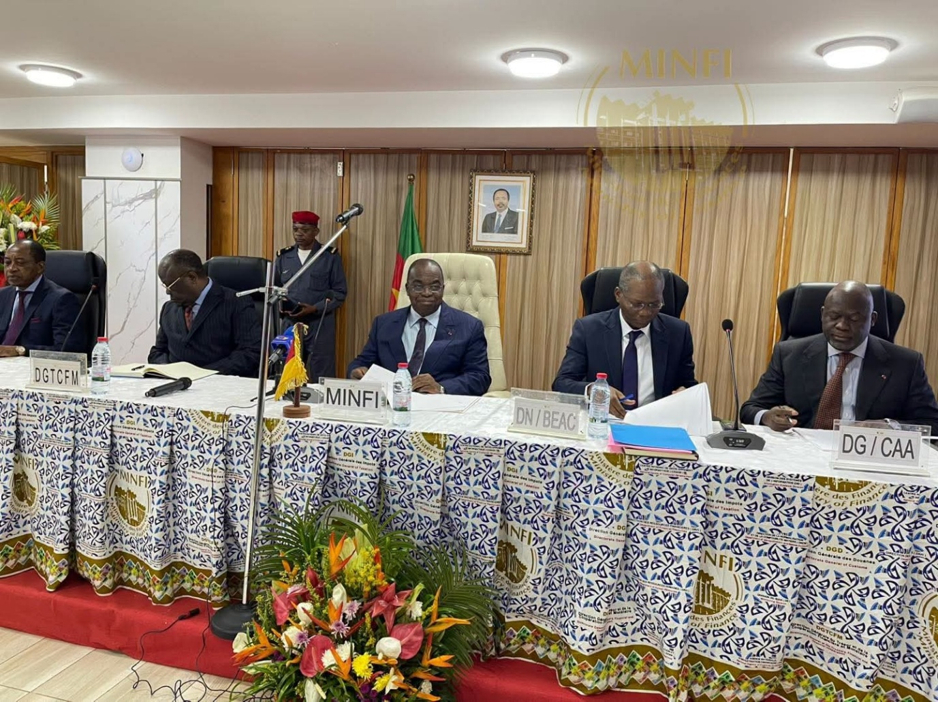
The Ministry of Finance launched an updated census of these funds on September 29 in Yaoundé, bringing together the government, BEAC, the Association Professionnelle des Établissements de Crédit du Cameroun (APECCAM), the Caisse Autonome d'Amortissement and commercial banks. The exercise is intended to establish where public funds are held, how much is in each account and which resources could eventually be transferred to the Treasury Single Account (TSA). (DGT CFM)
The numbers make the exercise worth watching.
Public administration deposits in commercial banks stood at roughly CFAF450 billion in 2022. By June 30, 2026, the figure had reached nearly CFAF1 trillion, according to data presented by BEAC's national director, Pierre Emmanuel Nkoa Ayissi. The government also held about CFAF390 billion at BEAC. (Cameroon Tribune)
For the Treasury, bringing greater visibility to those resources could change how the government manages its day-to-day cash needs. For banks, however, the exercise could have consequences for deposits and liquidity.
That is where the story becomes more complicated.
The money is already public. The issue is where it sits.
The government's argument is not that the money belongs to the Treasury simply because it is held in a bank.
The funds belong to public administrations, projects and programmes. Some may be subject to specific rules or commitments, while others may be eligible for centralisation.
The new census is therefore not an instruction to transfer the entire CFAF1 trillion immediately.
Its first job is to establish a reliable picture of the accounts.
Cameroon Tribune reported that the exercise is intended to identify the account holders, the nature of the accounts, their balances and the conditions or constraints surrounding a possible transfer to the TSA. (Cameroon Tribune)
This distinction is important because the headline figure of nearly CFAF1 trillion should not be interpreted as CFAF1 trillion of immediately available cash that the government can simply withdraw.
Some of the funds may be committed to specific programmes. Others may be operational balances. The government first needs to determine what is actually eligible for centralisation.
Seven banks hold 80% of the deposits
The concentration of the funds makes the exercise particularly relevant to Cameroon's banking sector.
According to BEAC figures presented at the Yaoundé workshop, seven banks hold around 80% of public administration deposits in commercial banks.
AFG Bank Cameroon accounts for nearly 40%, followed by:
UBA Cameroon: about 11%
CCA Bank: about 9%
Commercial Bank Cameroon: about 8%
The remaining share is distributed among other institutions. (Business in Cameroon)
Public administration deposits represent close to 10% of total deposits in Cameroon's banking system, according to the BEAC data presented at the workshop. (Business in Cameroon)
That gives the centralisation exercise a banking-sector dimension.
If substantial balances are transferred from commercial banks to the Treasury, banks could see their deposit bases decline. And because deposits are an important source of funding for bank lending, the timing and pace of any transfer will matter.
Why the Treasury wants greater visibility
The government's case is mainly about cash management.
When public money is spread across numerous accounts at different banks, the Treasury has a less consolidated view of the government's available liquidity.
That can make it harder to answer a basic question in real time: How much public cash is actually available, and where is it?
The Ministry of Finance says the reform should help to:
Improve visibility over public cash;
Strengthen expenditure and payment planning;
Improve the traceability of public resources;
Optimise the use of available funds;
Reduce short-term financing requirements.
The ministry's Directorate General of the Treasury and Financial Cooperation described the September 29 exercise as part of efforts to strengthen the traceability and governance of public funds. (DGT CFM)
There is a straightforward financial logic behind this.
If the government has cash available in different accounts while simultaneously borrowing to meet short-term obligations, there can be a cost to that fragmentation.
Centralising eligible resources gives the Treasury a fuller picture of its liquidity before it turns to additional financing.
The reform has been in the works for years
This is not a new idea.
The centralisation of public resources forms part of a broader CEMAC reform of the Treasury Single Account, with the process dating back to 2011 and supported by the World Bank. Cameroon subsequently incorporated the relevant regional framework into its legal system in 2018. (Business in Cameroon)
An earlier government review covering 2013–2023 identified 2,890 public accounts held in commercial banks.
Authorities then agreed with banks on a gradual transfer schedule running from January 2023 to December 2025. (Business in Cameroon)
The latest census suggests that the reform has not yet produced the level of consolidation originally envisaged.
It also provides the government with updated information after several years of changes in the banking system and public-finance environment.
Why the banks have a reason to pay attention
For commercial banks, public-sector deposits are valuable funding.
They can provide a relatively stable source of liquidity that banks can use within the limits of prudential and regulatory requirements.
Removing a significant volume of those deposits could therefore affect banks' liquidity positions and potentially their ability to extend credit.
This is particularly relevant in Cameroon, where access to financing remains an important concern for businesses.
Official economic data show that Cameroon's banking market has expanded in recent years. Total deposits reached CFAF8,351.6 billion at the end of 2024, up 8.1% from 2023, while loans increased 12.1% to CFAF6,060.2 billion. (MINEPAT Cameroun)
Against that backdrop, nearly CFAF1 trillion in public administration deposits is not a marginal amount.
The government itself recognises the potential liquidity impact.
Previous plans for transferring public funds took into account banks' exposure to government securities and the potential effect of withdrawals on banking-system liquidity. The latest exercise is expected to help authorities determine how the transfer can be handled without creating unnecessary disruption. (Business in Cameroon)
A balancing act for policymakers
This creates two objectives that have to be managed together.
The first is Treasury efficiency.
Government should know where its money is and avoid borrowing unnecessarily when eligible public resources are available elsewhere in the system.
The second is financial-system stability.
Commercial banks need sufficient liquidity to continue lending to households and businesses.
A rapid withdrawal of large deposits could create pressure on some banks, particularly those holding a disproportionate share of government-related funds.
That is why the pace and sequencing of the reform could matter almost as much as the final amount transferred.
For the banks most exposed to public deposits, the exercise could also encourage greater diversification of their funding bases.
The private sector could feel the effects
Although this is primarily a public-finance reform, businesses should pay attention.
Commercial banks depend on deposits to support lending. If a major source of deposits is gradually moved to the Treasury, banks may need to adjust how they fund their balance sheets.
That could influence lending conditions, particularly if the transition coincides with other liquidity pressures.
On the other hand, better Treasury cash management could reduce the government's need to seek short-term financing from the financial market.
Over time, that could alter the relationship between public borrowing and private-sector access to domestic financing.
The effect will depend on how the money is ultimately managed once it is centralised.
The CFAF1tn figure needs context
The CFAF1 trillion figure has understandably attracted attention, but it should not be treated as a simple pot of unused money.
The government is still conducting the census to determine the composition, ownership, status and eligibility of the funds.
There is also a difference between public administration deposits and other categories of public-sector resources held in banks.
For example, data from Cameroon's National Economic and Financial Committee showed that, at the end of 2023, central public administrations, local administrations and public establishments collectively held substantial deposits in commercial banks. Public enterprises represented another category of deposits. (ecofinances.net)
Those figures should not simply be added together and labelled as money available for immediate transfer to the TSA.
The current exercise is precisely about establishing what belongs in that central pool.
The next step is execution
The September workshop was essentially a reset of the information-gathering process.
The government now needs to reconcile the accounts reported by public administrations and banks, establish which funds qualify for centralisation and determine how transfers should be phased.
The process will require cooperation between the Ministry of Finance, BEAC, banks, public institutions and project managers.
The government's stated objective is not to deprive public institutions or decentralised local authorities of resources. Finance Minister Louis Paul Motaze said the objective is to give the State a consolidated view of resources available to it and improve its ability to meet financial obligations. (Business in Cameroon)
That distinction will be important as the reform moves forward.
For public institutions, the concern is whether centralisation could affect their ability to execute programmes and pay suppliers on time.
For banks, it is about liquidity.
For the Treasury, it is about knowing exactly what resources are available before seeking additional financing.
What businesses should watch
Several indicators will help show whether the reform is moving beyond another administrative exercise:
The updated account inventory.
The government needs to publish a clearer picture of the accounts and amounts identified.
The amount eventually transferred.
The CFAF1 trillion headline figure is only the starting point. The amount actually eligible for the TSA will be more meaningful.
The pace of transfers.
A gradual transition would give banks more time to adjust their liquidity positions.
Bank lending conditions.
Businesses should watch whether changes in deposit structures affect credit availability or pricing.
Government short-term borrowing.
One of the intended benefits of centralisation is to reduce unnecessary short-term financing needs.
Treasury payment performance.
If the reform works as intended, better cash visibility should support more predictable expenditure and payment planning.
Final Thoughts
Cameroon's decision to update the census of public funds held in commercial banks is about more than moving money from one account to another.
It is an attempt to improve how the government sees and manages its own liquidity.
Nearly CFAF1 trillion in public administration deposits were held in commercial banks as of June 2026, up sharply from the CFAF450 billion identified in 2022. At the same time, about CFAF390 billion was held at BEAC. (Cameroon Tribune)
The opportunity for the Treasury is clearer cash visibility and potentially less reliance on short-term borrowing. The challenge is making those gains without creating unnecessary pressure on the banks that currently hold the funds.
For Cameroon’s business community, the important story will therefore be what happens next: how much is actually centralised, how quickly it happens, and whether better public cash management ultimately leaves more room for the private sector to access financing.