
Douala Port Redistributes CFAF 2 Billion as Competition for Cargo Intensifies
The Port of Douala is putting money back into the businesses that generate its traffic.
On October 2, the Régie du Terminal à Conteneurs (RTC S.A.), a subsidiary of the Port autonome de Douala, distributed more than CFAF 2 billion in commercial rebates to importers, exporters and shipping companies operating through the Douala-Bonabéri container terminal.
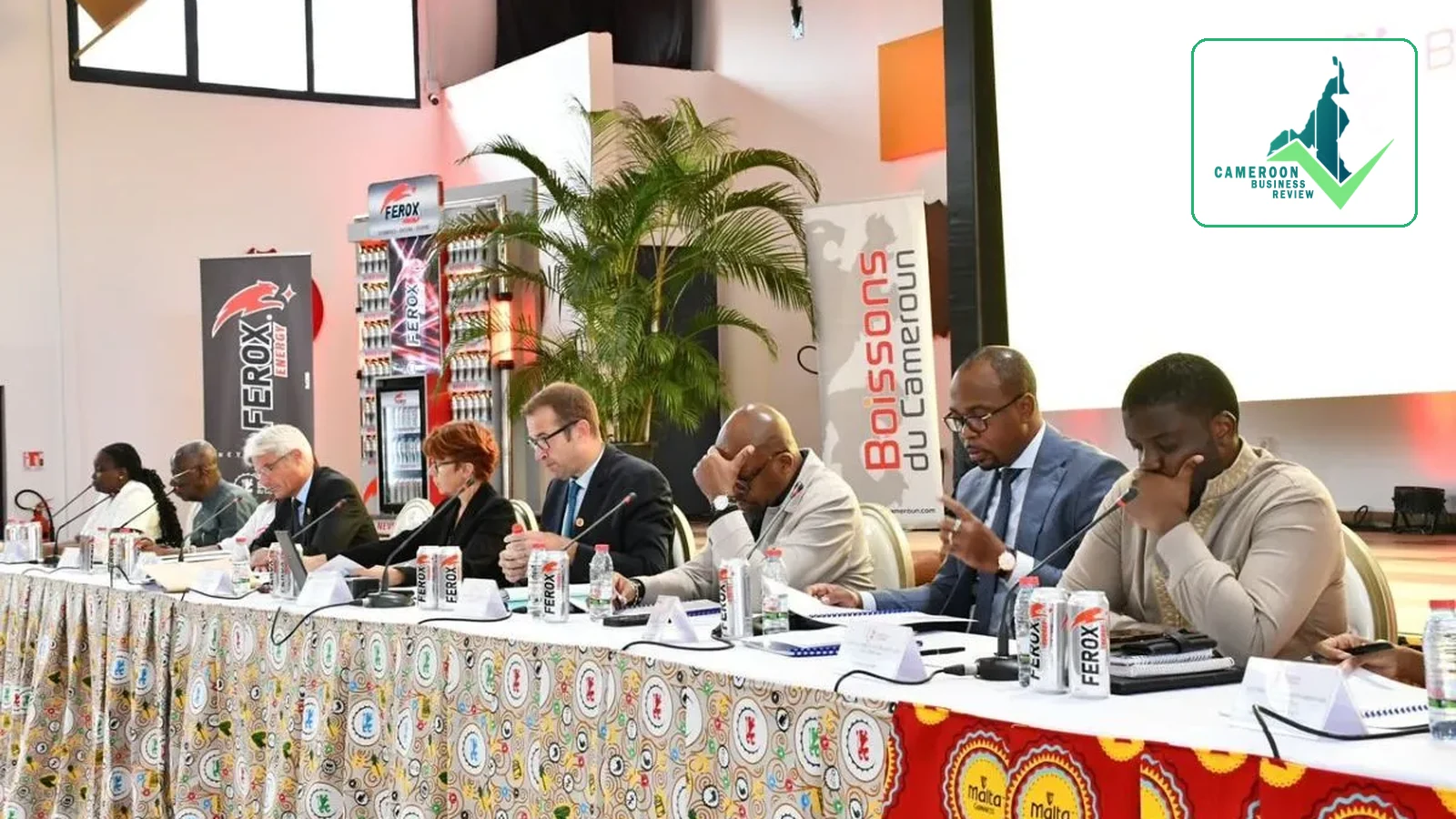
The payment covered activity during the 2025 financial year and was made during the RTC's fourth annual rebate ceremony in Douala. More than 200 business leaders and representatives of companies across agriculture, agro-industry, manufacturing, commerce and shipping attended the event.
On the surface, it is a customer-reward programme.
For the Port of Douala, there is more at stake. The rebates are part of a commercial strategy to keep cargo moving through the terminal at a time when businesses have more options across the Gulf of Guinea.
Where the CFAF 2 billion is going
The rebate system is tied to the amount of container traffic generated by each customer.
For the 2025 exercise, 80% of the CFAF 2 billion, or CFAF 1.6 billion, went to importers and exporters, while shipping lines received the remaining 20%, or CFAF 400 million.
Among the chargeurs, exporters received CFAF 1.04 billion and importers CFAF 560 million.
The system also distinguishes between businesses operating in Cameroon and those serving the country's hinterland markets.
This matters because Douala is not only a gateway for Cameroonian businesses. Its terminal also handles cargo destined for landlocked markets in Central Africa.
The larger the traffic generated by an operator, the more relevant the rebate becomes.
The system therefore links the financial reward directly to the commercial activity that the port wants to retain.
Exporters at the centre of the programme
The list of leading beneficiaries gives some indication of the industries generating significant container traffic through Douala.
Among the exporters recognised during the 2026 ceremony were NEO Industry, SODECOTON and Telcar Cocoa.
Their presence reflects the diversity of goods moving through the port, from industrial products to cotton and cocoa.
On the import side, Union Camerounaise des Brasseries (UCB), Société Anonyme des Boissons du Cameroun (SABC) and Congelcam were among the companies distinguished.
The shipping side included major international operators such as MSC, Maersk Line, CMA CGM, Hapag-Lloyd and PIL.
These are not insignificant customers.
For a container terminal, retaining a major shipping line can influence the frequency of vessel calls, while large importers and exporters help provide the cargo volumes needed to make those services commercially viable.
That makes the rebate programme less like a conventional discount and more like a tool for managing the port's customer base.
CFAF 8 billion returned in four years
The 2026 distribution is the fourth edition of the RTC's rebate programme.
With another CFAF 2 billion distributed for the 2025 exercise, the cumulative amount returned to partners over four editions has reached CFAF 8 billion.
The figure is worth watching because it shows that the programme has become a recurring part of the terminal's commercial model.
RTC has been operating the Douala-Bonabéri container terminal since January 1, 2020, after the Port autonome de Douala took over the operation from the former concession arrangement. The terminal was subsequently converted into a public limited company and became a subsidiary of the PAD.
The rebates are therefore part of a broader effort to build a commercial relationship with the companies using the terminal.
Why cargo retention matters
Ports compete for more than ships.
They compete for the companies whose goods fill those ships.
For Douala, that competition is becoming increasingly important as businesses in Cameroon and neighbouring countries assess different routes for moving goods.
The Port of Kribi has expanded its role as a deep-water alternative, while other ports along the Gulf of Guinea compete for regional cargo and shipping connections.
A port can have cranes, berths and storage yards, but those assets only generate economic value when cargo actually passes through them.
That puts pressure on port operators to look at the entire customer experience, including turnaround times, digital procedures, equipment availability, costs and the reliability of cargo handling.
RTC itself says it is working on infrastructure modernisation, productivity improvements and digitalisation as part of its efforts to improve the terminal's competitiveness.
The rebate programme fits into that picture.
The seven-day incentive
The structure of the rebate also contains a signal about what RTC wants its customers to improve.
For imported containers, a stay of seven days or less qualifies for a 5% bonus.
Between eight and 11 days, there is no adjustment.
After that, the rebate is progressively reduced: 2.5% for stays of 12 to 15 days, 5% for 16 to 20 days, 7.5% for 21 to 25 days and 10% for stays exceeding 25 days.
In practical terms, the system rewards businesses that move containers through the terminal more quickly.
That is important for a port because long container dwell times tie up space and equipment. Faster movement can increase the effective capacity of an existing terminal without necessarily requiring an immediate expansion of its physical footprint.
The rebate therefore has two purposes: reward traffic and encourage more efficient use of the terminal.
A commercial tool, not just a payout
The CFAF 2 billion distribution should also be viewed against the revenue that the port ecosystem generates.
The RTC has previously reported substantial payments to the Port autonome de Douala through terminal-related fees. Between 2020 and 2024, the terminal reportedly paid CFAF 89.2 billion in royalties to the PAD, with annual payments increasing from CFAF 15.7 billion in 2020 to CFAF 20 billion in 2024.
That context changes how the rebate should be understood.
The money being returned is not simply leaving the port system. It is being used as a commercial incentive within the same wider logistics ecosystem.
For importers and exporters, the immediate benefit is financial.
For RTC, the expected return is continued customer activity.
For shipping companies, maintaining attractive cargo volumes can help support their services into and out of Douala.
And for the wider economy, the efficiency of the port matters because delays and logistics costs eventually feed into the cost of imported goods and the competitiveness of exports.
The bigger test is performance
The CFAF 8 billion cumulative figure is impressive, but the more important question is what the rebates achieve.
Are they helping Douala retain shipping lines?
Are businesses moving containers faster?
Is the terminal handling more cargo?
Are exporters finding the port more competitive?
And are importers facing fewer delays?
Those are the indicators that will ultimately determine whether the programme is working.
RTC's own stated priorities include digitalising procedures, improving productivity and reducing constraints for customers.
That means the rebate programme cannot operate in isolation.
A financial incentive may encourage a company to remain with a port for another year. But sustained loyalty will depend on whether the underlying service is competitive.
Douala's next challenge
Douala remains one of Cameroon's most important gateways for international trade, with connections extending into the country's hinterland and neighbouring markets.
That position gives the port a large existing customer base.
It does not guarantee that those customers will stay.
As competing ports develop their infrastructure and seek larger shares of regional trade, Douala will have to compete on several fronts at once: price, speed, reliability, connectivity and service.
The CFAF 2 billion rebate programme shows that the port is willing to compete commercially.
The next question is whether that spending can translate into stronger and more predictable cargo flows.
Final Thoughts
The latest CFAF 2 billion distribution by RTC tells us something about where port competition in Central Africa is heading.
The battle is no longer only about who has the biggest terminal or the deepest harbour. Customer retention is becoming part of the infrastructure story.
For Douala-Bonabéri, returning CFAF 8 billion to customers over four years is one way of keeping those relationships strong.
But the longer-term measure will be operational: more cargo, faster movement, reliable shipping connections and lower friction for businesses using the port.
For Cameroon Business Review, that is the part worth watching as Douala and other Gulf of Guinea ports compete for the next generation of regional trade.