SOCADEL’s Prepaid Meters Now Cover 44.85% of Customers. Is the Money Following?
Cameroon’s state-owned electricity utility, SOCADEL, is expanding prepaid electricity billing. By the end of September 2026, 1,090,654 customers were using prepaid meters, representing 44.85% of the company’s 2,431,711 subscriptions.
The figures, released by the company on October 8, show that prepaid billing has become a much larger part of the electricity business than it was two years ago. But the number of meters installed does not, on its own, show whether the utility is collecting enough money to meet its obligations.
That distinction matters as SOCADEL, which succeeded Eneo after the state took over the electricity operator in 2026, tries to improve its finances while maintaining and expanding electricity services.
The company expects prepaid billing to help it receive payments earlier, reduce billing costs and limit unpaid bills. Yet it has not disclosed the actual cash advances generated by the expansion or the total savings already achieved through prepaid conversions.
For a utility facing a persistent gap between collections and expenses, the financial results will matter more than the installation figures alone.
Prepaid customers have increased by about 36%
In August 2024, Eneo reported approximately 800,000 prepaid meters, representing 34% of its customer base. By the end of September 2026, the number of prepaid customers had reached more than 1.09 million.
That is an increase of roughly 36% in just over two years, while prepaid billing’s share of total subscriptions has risen by nearly 11 percentage points.
The expansion reflects two different activities: connecting new customers and replacing existing meters with prepaid devices. SOCADEL has not disclosed the precise contribution of each to the current total.
The distinction is important because the financial effects are not identical.
When an existing customer switches from postpaid to prepaid billing, SOCADEL can receive payment before supplying the electricity consumed. The company may also spend less on meter reading and bill distribution and face fewer unpaid bills.
A new connection, meanwhile, brings another customer onto the network. It can generate additional electricity sales while allowing the company to collect payment in advance.
Both developments can support the utility’s finances, but their contributions need to be measured separately. A higher prepaid share does not necessarily mean electricity sales have increased, nor does it reveal how much unpaid debt has been avoided.
The promise of CFAF 4 billion in monthly cash advances
SOCADEL’s 2026–2028 restructuring plan relies on prepaid billing as one of the measures intended to improve its financial position.
A draft performance contract for management reportedly set 2026 targets of 60,668 conversions of existing meters and 364,010 new connections. These are planned targets, not confirmed results.
In its October 8 update, SOCADEL reported that new connections increased from 9,632 in April to 11,019 in July 2026, a rise of approximately 14%. The company did not provide a corresponding figure for the number of existing meters converted since the start of the year.
The financial projections raise further questions. An initial phase involving 50,000 meter conversions is expected to generate CFAF 200 million in monthly cash advances and CFAF 20 million in savings on meter reading and bill distribution.
At that rate, each converted meter would account for an average of CFAF 4,000 in monthly cash advances. The money represents payments received earlier than under postpaid billing, rather than CFAF 200 million in additional recurring revenue.
The draft performance contract also projects up to CFAF 4 billion in monthly cash advances, with a second conversion phase in the second half of 2027 expected to add approximately CFAF 1 billion. Monthly savings from lower commercial operating costs are projected at CFAF 50 million.
However, the available figures do not fully explain how these projections are expected to be achieved. At CFAF 4,000 per converted meter, CFAF 4 billion in monthly advances would correspond to one million converted meters. Yet the programme reportedly provides for about 201,000 conversions between 2025 and 2028.
The documents do not clarify whether the CFAF 4 billion projection includes new prepaid connections, assumes different consumption levels or covers a broader set of activities.
There is also a discrepancy in the draft contract’s estimate of the prepaid customer base after its first phase of conversions. It puts the total at 691,644, below the approximately 800,000 prepaid meters Eneo had already reported in August 2024.
These inconsistencies make it difficult to assess the assumptions behind the financial targets. SOCADEL will need to publish actual results if customers, investors and public authorities are to judge how much the programme is contributing to its recovery.
A cash-flow problem that prepaid billing cannot solve alone
The utility’s financial difficulties extend beyond the timing of electricity payments.
According to figures cited in the restructuring plan, SOCADEL issues an average of CFAF 40 billion in electricity bills each month but collects around CFAF 31 billion. Its monthly expenses are estimated at CFAF 44 billion.
That leaves a gap of approximately CFAF 13 billion between collections and expenses.
Prepaid billing can help reduce payment delays and exposure to unpaid bills. But where an existing customer consumes roughly the same amount of electricity, collecting payment earlier does not automatically increase the total revenue earned from that consumption.
The benefits will depend on how customers previously paid, how much debt the company avoids, the costs it saves and whether new connections generate additional sales.
Even if the projected CFAF 4 billion in monthly cash advances were fully achieved, it would not, by itself, close a CFAF 13 billion monthly gap between collections and expenses. Moreover, cash received earlier should not be treated as equivalent to new recurring income.
SOCADEL therefore needs to demonstrate how prepaid billing fits into its wider financial recovery strategy, alongside better collections, cost management, investment in the network and action against electricity theft.
Electricity fraud remains a challenge
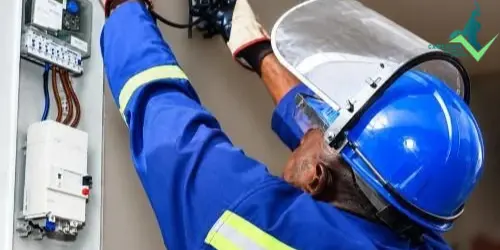
Prepaid meters can reduce some billing disputes, but they do not eliminate electricity fraud.
Eneo previously reported that the installation of 630,000 smart meters contributed to a 54% reduction in billing-related complaints between 2020 and 2022. That suggests digital metering can improve parts of the commercial process.
However, the operator also reported in October 2023 that 62% of fraud cases detected during the first half of that year in Douala and Yaoundé involved prepaid meters, compared with 38% involving postpaid meters.
These figures describe the distribution of detected cases, not the percentage of prepaid or postpaid customers committing fraud. They also do not establish that prepaid meters are inherently more vulnerable, since inspection patterns and the number of meters in each category affect the results.
The reported fraud methods include bypassing meters, making direct connections to the network and tampering with internal components so that some electricity consumption goes unrecorded.
Such practices undermine the financial benefit of prepaid billing because electricity can still be consumed without the corresponding payment reaching the operator.
SOCADEL says its anti-fraud operations are producing better collection results. The company reported that average monthly collections from these operations increased by 26% between May and July 2026 compared with the January–April period.
It has not, however, disclosed the amounts collected or the specific contribution of prepaid meters to that improvement. The results are encouraging, but their financial significance remains difficult to measure without the underlying figures.
What businesses and electricity customers should watch
For businesses, the effectiveness of SOCADEL’s recovery programme has consequences beyond the company’s balance sheet. Electricity reliability and the utility’s ability to maintain its network affect manufacturers, retailers, service providers and households.
Prepaid billing may help the operator manage its cash flow, but it does not directly resolve problems such as inadequate generation, network faults or delays in maintaining distribution infrastructure.
The results to watch over the coming months include the number of existing meters converted, the pace of new connections, actual cash advances, operating-cost savings and the amounts recovered through anti-fraud operations.
It will also be important to see whether improvements in collections translate into better maintenance, fewer interruptions and more reliable service for customers.
Publishing these figures regularly would allow the public to distinguish between progress in installing meters and progress in improving the financial and operational performance of the electricity system.
Final Thoughts
SOCADEL’s 1.09 million prepaid customers mark a significant expansion of advance electricity billing in Cameroon. The system offers practical advantages, including earlier payments, lower billing costs and reduced exposure to unpaid bills.
But the 44.85% coverage figure is not proof that the utility’s financial problems are being resolved.
The real test is whether prepaid billing generates measurable improvements in cash collection, whether the company can reduce electricity theft and whether the money collected helps it meet its obligations and improve service.
For now, the rollout is advancing. The financial gains still need to be demonstrated.